

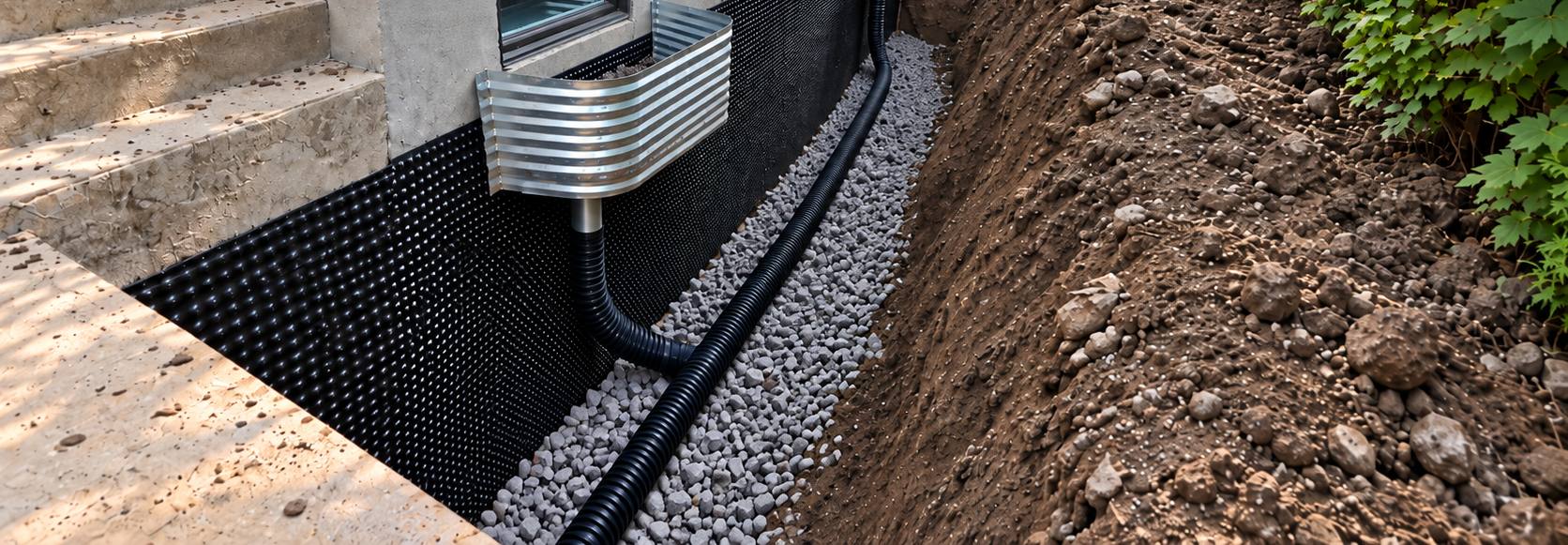
Visual adapted from the project
Residential · Drainage
Foundation drain and site grading
Montreal
Better drainage around the building and a lower risk of water infiltration.
Water pooling in the backyard, basement infiltration, a neighbour’s fill, pavers that drain the wrong way: we find the probable cause and determine what to fix, before you invest in work.
We can figure out what is happening and determine what needs fixing, so you avoid paying for work that does not address the real cause.
Have my problem assessedObserved situation
Recommended fix
A backyard that holds water usually has a low point with no outlet, too little slope, or more water coming in than the ground can absorb. Adding a drain is not always the answer: first you need to know where the water comes from and why it stays.
Site grading plans and layoutWhen the ground slopes toward the house, every rain brings water against the foundation. The cause may be settled soil, poorly graded landscaping or downspouts discharging in the wrong place.
Grading plans and slopesA neighbour who raises their lot, or a new building next door, can completely change how water flows toward your property. To discuss it on solid ground, the grades on both sides of the property line must be measured and what changed must be documented.
Expert assessment: water coming from a neighbouring lotWater in the basement does not always come from a failing foundation drain. Grading around the house, roof water management and the drain’s outlet often play just as big a role. Pinning down the right cause avoids costly, unnecessary work.
Foundation drainagePavers or paving redone with a reverse slope, a badly connected drain, poorly compacted fill: some problems show up right after work is done. Measuring the actual slopes makes it possible to compare what was built with what should have been.
Expert assessment: poorly executed paving and paversWhen the situation calls for it, our findings are presented in an engineer’s technical report. It is useful for:
Converting a basement into a dwelling or a habitable room, or building an addition near a low point? Depending on the borough, a civil engineering report on stormwater management may be required. We can analyze the site conditions and prepare that report.
Read our article on cuvette areas (in French)Understand first. Fix second.
You tell us what you are seeing.
We identify the probable cause of the problem.
We determine the corrective work and the documents you need.
Foundation drainage, site grading, a condominium parking area: mandates carried out for private clients and condominiums.
Visual adapted from the project
Residential · Drainage
Montreal
Better drainage around the building and a lower risk of water infiltration.
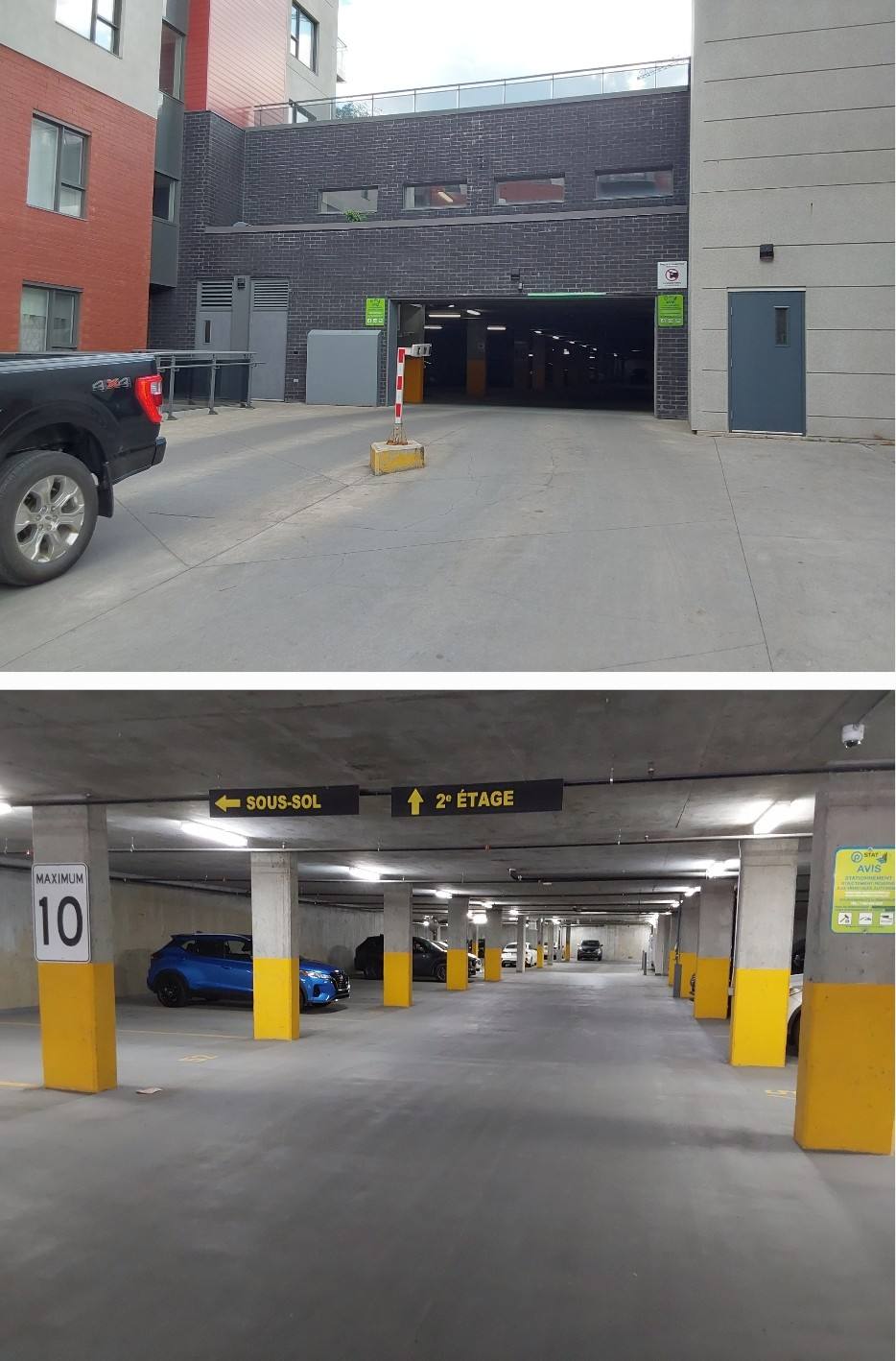
Condominium · Parking
Laval
About 450 parking stalls
Topographic survey and new stall layout during the membrane rehabilitation.
Tell us about the situation: we will explain the right approach and the next steps. You can then send us your photos by email.